
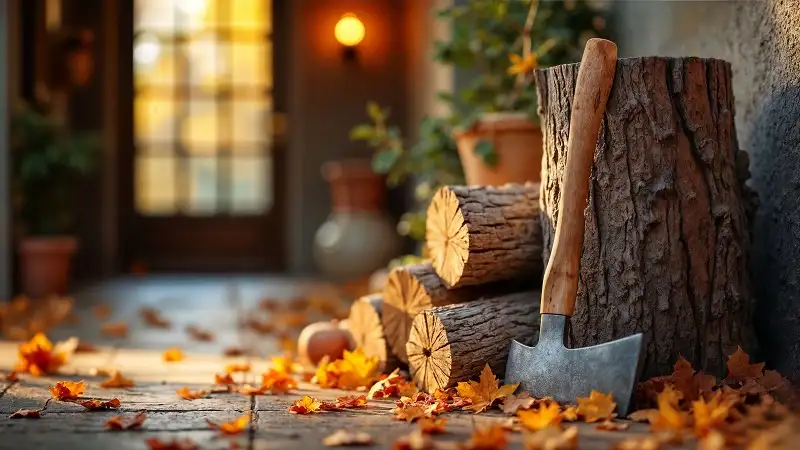
When you had that tree cut down, somebody probably told you the stump would rot away on its own. That’s true, but nobody mentioned it could take 10 years or more.
So, you’ve done what most people do. You’ve put a plant pot on top of it, started calling it a ‘rustic feature,’ and carried on mowing around it.
The trouble is that a stump can keep causing problems long after the tree is gone, and getting it out is a much bigger job than it looks. So, if you’ve been wondering whether it’s worth paying a professional to remove yours, keep reading.
Removing Trip Hazards
If there’s a stump in your lawn, sooner or later someone is going to trip over it. It’s easy enough to spot on a clear day, but long grass and autumn leaves can hide it completely.
And if you like having people over in summer, remember that your guests have no idea the stump is there. All it takes is one person crossing the lawn with a plate of food, and your barbecue could end with a trip to the A&E.
Your children are even more at risk because they rarely look where they’re running.
When a professional removes the stump, they grind it down below ground level and take out any surface roots, too. That leaves you with a flat lawn that’s safe for everyone to walk and play on.
Making Mowing Easier
Even if nobody ever trips over it, the stump will still get in the way every time you cut your grass. You have to slow down, steer the mower around it, and then go back with the shears to tidy up the long grass around the edges.
And if you get too close, you can easily chip the blade on a hidden root, which means a trip to B&Q for a new one.
Once the stump is out, ask the team to fill the hole with topsoil instead of the leftover wood chippings. Chippings shrink and sink as they decompose, leaving you with a dip in the middle of your lawn a few months down the line.
After that, you can lay turf or sow grass seed on top and mow your whole lawn in one go.
Preventing Unwanted Regrowth
A tree doesn’t always die when it’s cut down, and many stumps start growing the following spring again.
That happens because the roots are still alive, so they keep sending up new shoots around the base of the stump. You’re most likely to see this with willow, poplar, sycamore, and lime, which are some of the most common trees in Britain.
Cherry and plum trees can cause even more problems, because their roots send up shoots several metres away from the stump, sometimes right next to your home.
You can cut these shoots back, but they’ll end up growing back thicker than before. Before long, you’ll find yourself regularly pruning a tree that you’ve already removed.
With professional stump grinding, you get rid of the stump and the top of the root system, where most new growth starts.
Reducing Pest Problems
Now, let’s assume your stump doesn’t grow back and slowly starts to rot instead. That might sound like good news, but rotting wood attracts a lot of unwanted pests.
As the wood gets softer and damper, it becomes the perfect home for ants, woodlice, and beetles. A hollow stump can even attract wasps looking for somewhere to build a nest.
Most of these insects are fairly harmless. The bigger concern is honey fungus, which feeds on dead stumps and roots and then spreads to healthy plants.
The Royal Horticultural Society describes it as the most destructive fungal disease in UK gardens. It can travel through the soil by up to a metre a year and kill the trees and shrubs you want to keep.
A professional stump removal team will clear away the rotting habitat entirely, and they can spot early signs of disease before it wipes out the rest of your borders.
Freeing up Space
Once the stump is out, you’ll have a clear patch of ground that you can put to good use. You can extend your lawn, plant a new flower bed, or finally find a spot for that deck you’ve been meaning to add.
Just tell the team about your plans before they start. Standard grinding goes down about 15 to 30 cm, which is deep enough for a lawn or flower bed.
But if you want to lay a patio or put up a shed, they may recommend removing the whole root system instead.
Most companies will either take the wood chippings away or leave them for you. If the stump was healthy, you can use them as mulch for your paths.
And if you want to plant a new tree, put it about a metre away from the old spot, so its roots have fresh soil to grow into.
Protecting Surrounding Areas
By now, you might be tempted to save some money and remove the stump yourself. Unfortunately, this is how many homeowners end up damaging the rest of their gardens.
Roots spread much further than you’d expect, and the thickest ones often run under your patio or fence. So, the more you dig, the closer you get to lifting your paving slabs or loosening a fence post.
It’s even harder if you have heavy clay soil, which is common in London and across the South East. After a week of rain, it can end up sticking to your spade like wet cement.
You could hire a stump grinder for the day, but these machines are heavy and difficult to control. They also throw stones and wood chips in every direction, and you have no way of knowing where your pipes and cables are buried.
Professionals check for pipes and cables before they start, and they put up screens to catch any flying debris. They also have narrow grinders that fit through standard garden gates.
Most companies that specialise in tree surgery also provide stump removal services. So, if you’re having a tree taken down, ask for a combined quote and double-check that the company carries full liability insurance.
Conclusion
You’ve spent enough time mowing around that stump and cutting back shoots from a tree that’s supposed to be gone. A professional team can remove the whole stump in a single morning, and you won’t have to pick up a spade.
So, book your appointment and move that plant pot back to the patio where it belongs. You’ll have a flat, tidy lawn and one less job on your list.