
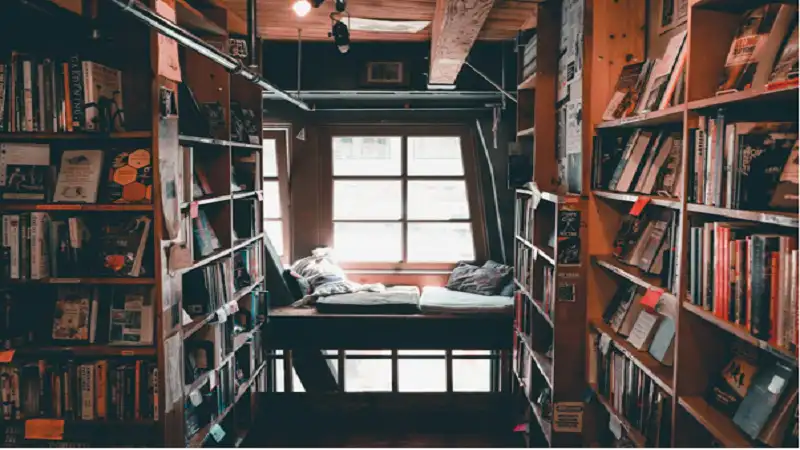
Your attic space is likely the area where you never go into for fear of spiders and cobwebs and whatever horror film you’ve been watching that makes you believe there’s an evil spirit up there.
Don’t deny you’ve never been even a little spooked.
But, in reality, what you have up there is the perfect escape from the world. It’s like a house on top of your house and can be transformed into a true sanctuary.
Yes, it’s a challenge, but it’s an exciting one that turns a relatively unused area of your home into another space. Read on for 4 DIY projects that will start the transformation.
An Extra Bedroom Reading Nook
This is an overhaul DIY project, but one with the potential to get so much use out of and that can add more value to your home. Consider it a reading-focused retreat that adds function and value. Even with a smaller attic, it works well, and you don’t need a full-size bedroom to make it work.
Start with the basics and check the insulation and ventilation. Attics need airflow and protection from the cold. You can’t spend much time up there without either, but this is the most expensive thing you’ll do, especially if you’re putting windows in (advisable). You’ll also need to put flooring down and reinforce it for the added weight.
Once the expensive part is out of the way, define the “nook” area. Use rugs and a simple seating area, like a wide armchair. Always place it near the window for natural light. You could even push the boat out and get a chaise lounge if you’ve got the space. Style it with comfy cushions and a throw, and you don’t need to do much more than that.
That’s the basis of the reading nook corner.
What to do with the rest of the space
Considering space is not likely to be in abundance, buy a twin mattress with an ottoman frame for storage. A twin is better, but if you only have space for a single, that’s fine. You can get a small side table next to it and a lamp for some cozy vibes.
And as you want it to be a bedroom, you want curtains and strategic lighting to make it feel as much like a bedroom as it is a reading nook.
Add in a bookshelf, however small, where you can, and some decorative fairy lights and maybe an indoor plant or two, and you’ve created the basics of a reading nook/second bedroom.
The rest of the decor is up to your personal preferences.

How to Use the Sloped Walls
Most attics will have sloped walls and ceilings, and naturally, you’ll think of them as a limitation. We consider them a design feature.
You can use the low-height areas for seating, reading benches, or that mattress. You can also put drawers, cubbies, baskets, or a wardrobe there. Or, if you want to push the boat out, you can install custom or DIY shelving that follows the angle of the roof. Fitting shelves into angled walls is difficult, but it is possible, and it can look so good for your books or the decor.
More than anything, in our opinion, putting your seating under the cocoon-like area is the best. It feels more cozy; you can position it with the natural light, as we said, but you can also use floor lamps and fairy lights for the evening/nighttime cozy vibes.
For the actual design of the walls, consider wood paneling or exposed beams to add character.
Reconditioning a Second-Hand Bookshelf
Considering it’s a reading nook, a bookshelf is a staple feature.
Yes, you can easily buy one, but this is a DIY project post. A second-hand bookshelf is a budget-friendly DIY project waiting to be repurposed.
You can find one in thrift stores, flea markets, or online marketplaces. They’re such a common item, so you won’t need to look far, but you will notice that they’re often solid wood pieces that just need simple cosmetic work.
It’s not like we’ll get you taking one apart or building it from scratch.
All you would need to do is sand down rough or damaged surfaces, repaint or stain to match the aesthetic of your attic, and replace handles or hardware if needed.
You can follow this YouTube tutorial to learn exactly how to do it with a visual guide.
If you’re lucky enough to have an attic that you can convert into a reading nook, you definitely should. The hardest and most expensive part is the installation, ventilation, lighting, and flooring. After that, it’s a fun DIY project!
Learn more: AlterNativeWayNet